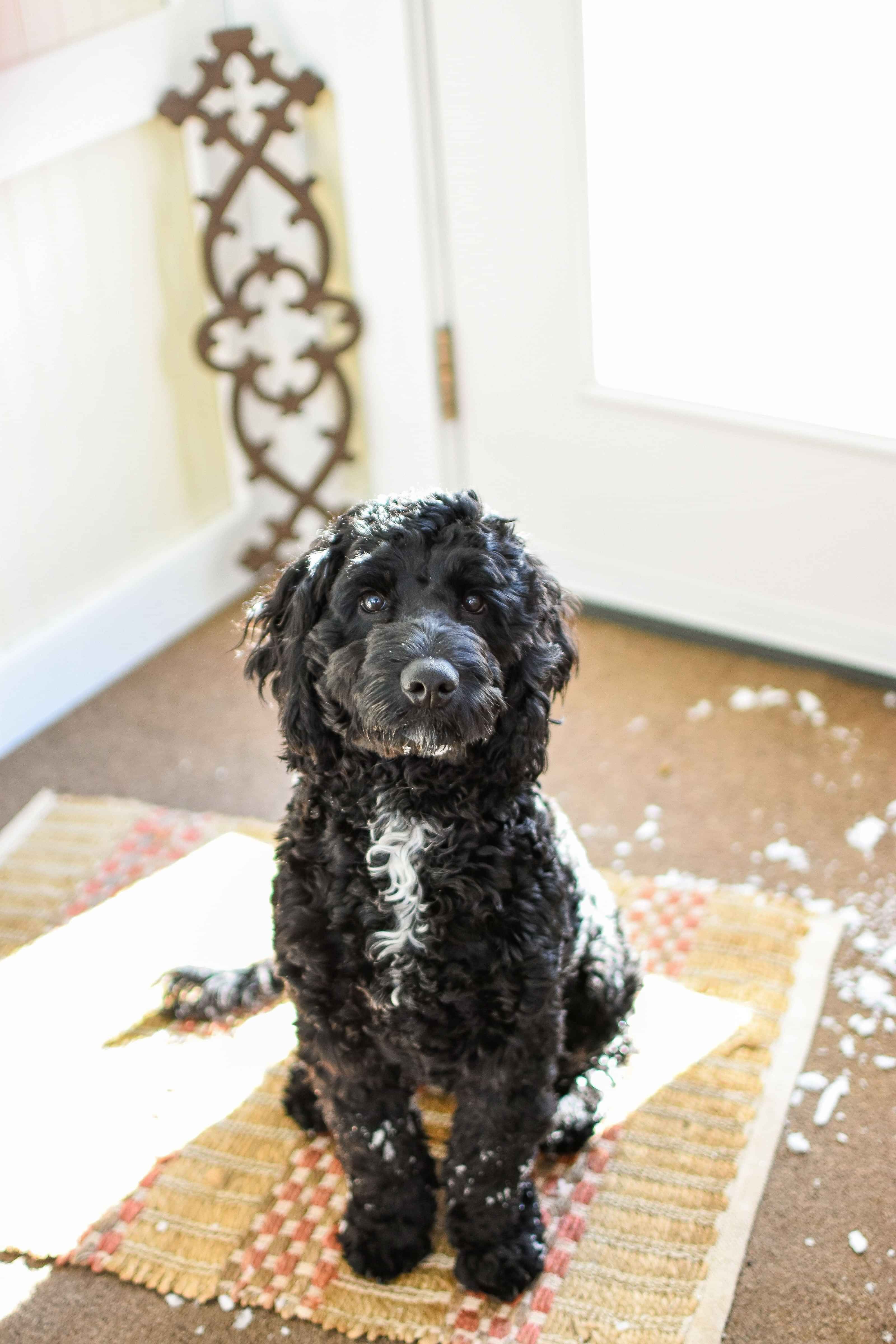
MAT TRAINING
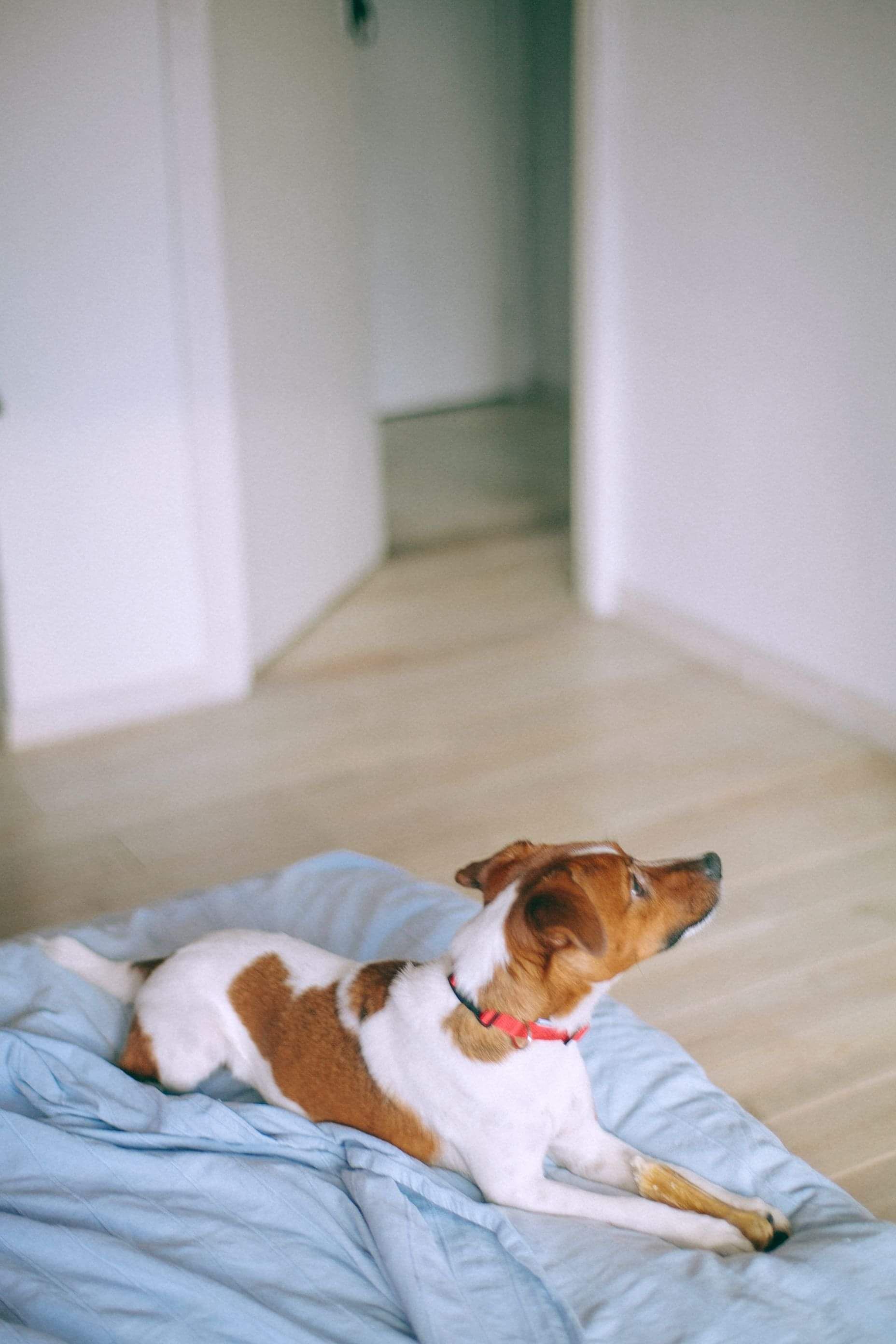
Benefits of Mat Training
The benefit of teaching dogs to go to their mat is that it lets the dog know exactly what is required around the house, and, as it is portable, when visiting friends or at the vets, or in holiday locations. Also just to lie quietly, chew a toy or treat, and wait till we let them know what else to do.
Mat training can also be beneficial to prevent any unwanted behaviours like jumping on beds or sofas, being restless and demanding attention, plus as a place to go which is out of the kitchen when you are cooking or eating dinner.
You can also use a mat for when you have guests come over to prevent your dog from rushing at the door or your guests and is great to use in multi dog households.
Getting Started
To teach your dog to go to their mat, lure your dog with a yummy treat towards the mat, click and reward with the treat as soon as your dog steps onto the mat. Repeat several times.
Shaping
You can also shape your dog to go onto a mat.
Start by placing a mat on the ground in front of your dog. Mark and treat any interest your dog shows in the mat, for example, sniffing it or putting a paw on it.
Gradually increase the criteria so that you are only rewarding 2 paws on the mat, then 3, then 4, or a sit on the mat etc.
Between each reward, toss a treat away from the mat to reset your dog.
The benefits of shaping are that your dog starts to think for themselves as to what is the most appropriate behaviour.

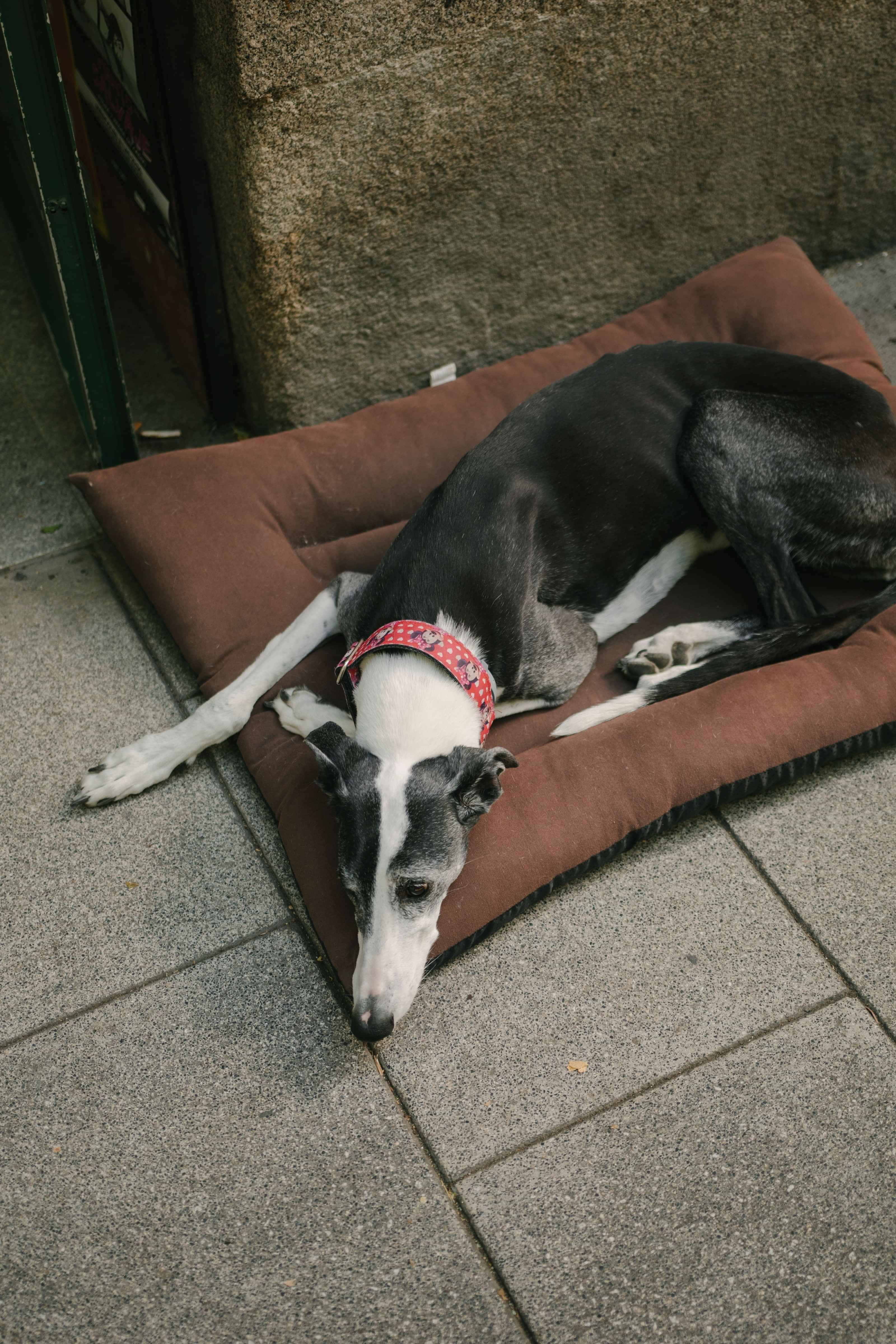
Hand Signals and Verbal Cues
After a few repetitions, add your verbal cue such as ‘on the mat’ or ‘to your bed’. Click and reward with the treat as soon as your dog steps onto the mat. Repeat several times.
You can extend this by asking your dog to go to the mat and sit or lie down, followed by a click/treat.
With time you will be able to remove the lure from your hand, the same hand motion as before is now becoming your hand signal. Use this as well as the verbal cue to ask your dog on the mat, click and treat immediately.
If using shaping, simply putting the mat on the ground may act as a cue for your dog to sit on it.
Working on Relaxation
Teaching your dog to go to a mat is one thing, but what about actually relaxing on a mat? To build relaxation, start by rewarding behaviours which may lead to relaxation such as shifting onto a hip, putting the head down, even deeper breathing.
You can use a lead to teach your dog to stay and settle and practice in short sessions gradually extending the time between rewards.
Tips
Occasionally sprinkle some high value treats on the mat when your dog is not in the area. This will create a great association! When they come to find ‘treats have grown’ there, your dog might decide to check the mat a bit more often.
Keep the time on the mat short initially, with time your dog will choose to go to the mat more often and will remain there for longer periods of time.
You can use a tether (a lead or tether point) to keep your dog on their mat for longer. However, this must be done only under supervision, and make sure your dog has something nice/fun to do such as chew on a roo tendon or a food toy especially if you have a puppy.
Trouble shooting
If your dog doesn’t like going to, or staying on their mat or bed, think about 1) where it is placed – is it in a draft, or is it too far away from family activity (or too close to it)? 2) Is the mat or bed too hard, too soft, or too hot in summer, too cold in summer #goldilocks